

 VS
VS
Clay vs Apollo.io
Clay and Apollo.io approach the same job from opposite ends. Apollo owns its data: 240M+ contacts and 30M+ companies on their published figures, searched with 65+ filters and sold per seat with a credit allowance attached. Clay owns no database. It routes each record through a marketplace of 200+ providers using what it calls waterfall enrichment, running sources in sequence until one returns a result, then lets Claygent research whatever the providers missed. The difference lands in the bill. Apollo charges one credit per email reveal, eight per mobile number and one export credit whenever a contact is exported outside the platform, with no rollover between billing cycles and overage credits at $0.20 each in 250 credit minimums, from their published pricing, July 2026. Clay meters two currencies at once, actions and data credits. Unused actions reset every month, roughly one month of credits rolls over on Launch and Growth, and top up credits carry a 30 percent premium, from their published pricing, August 2026. Apollo also sends. Clay ships a native email sequencer, but its centre of gravity is building the list rather than working it.
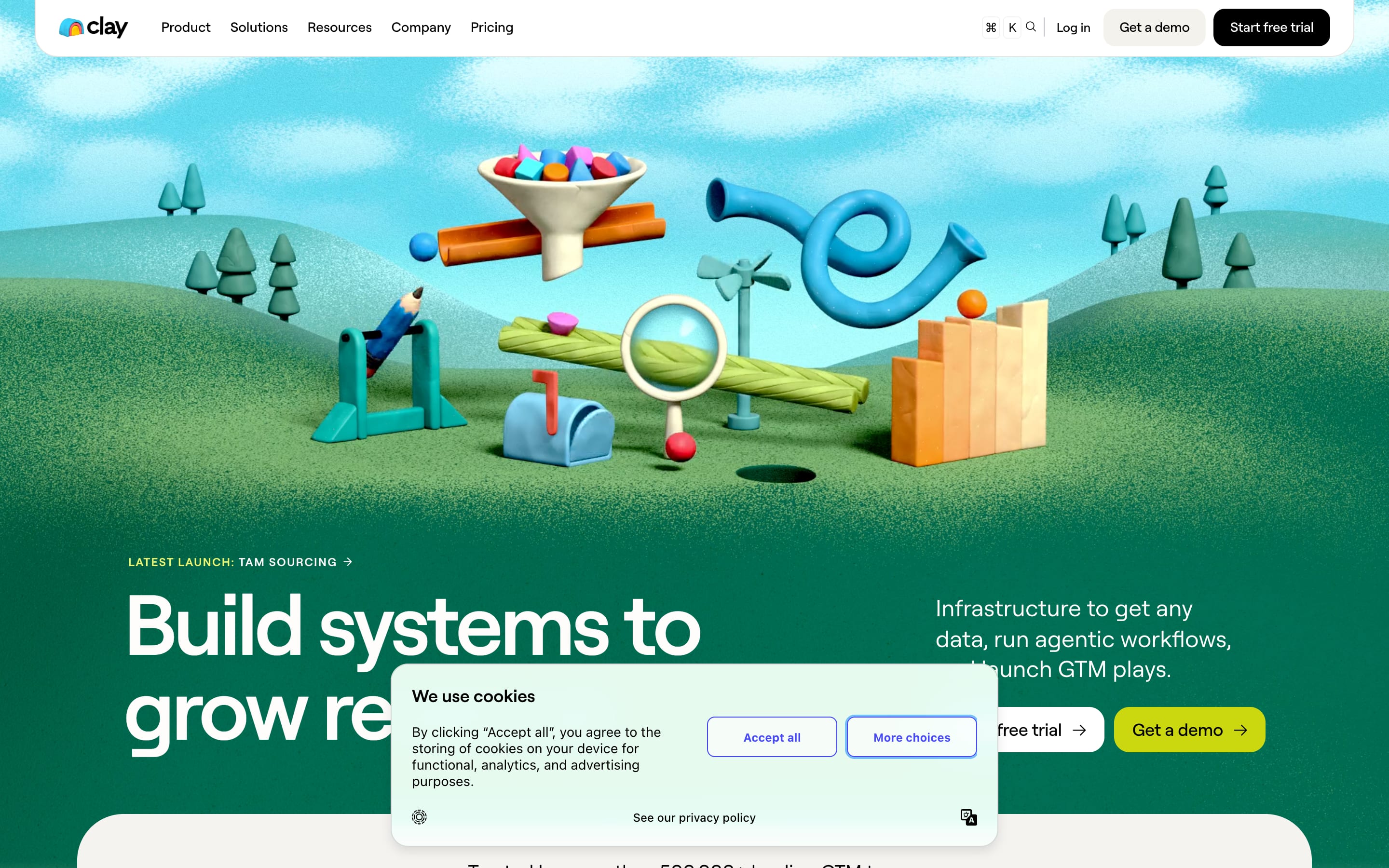
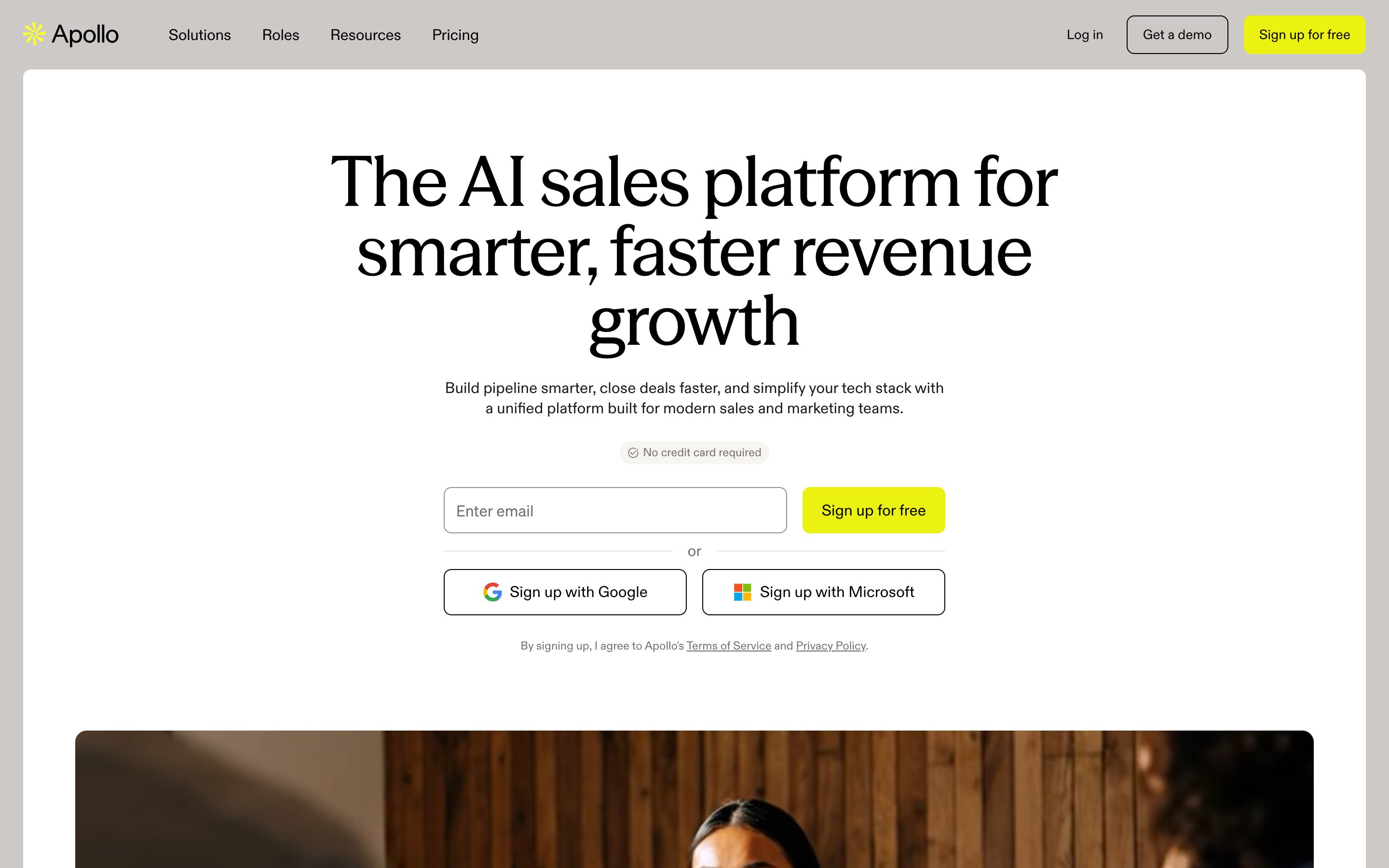
Apollo is a priced database with sequencing attached, while Clay is a build environment that buys from many databases at once, so the real choice is between one fixed data source you can budget and a flexible one somebody has to design.
Pick Clay if
- Coverage matters more than any single vendor's fill rate, and waterfall enrichment across a marketplace of 200+ providers is worth the extra setup.
- You have someone technical enough to build the workflows, which is the skill set the GTM engineering role grew up around.
- You want AI research in the same table as the data, since Claygent runs web research on every plan including Free.
- Signals drive your outbound: job changes, promotions, hiring, company news and web intent are first class inputs in Clay.
Pick Apollo.io if
- You want one predictable per seat price with the data included, from $49 per user per month billed annually, from their published pricing, July 2026.
- Sending is part of the purchase: automated email sequences, A/B testing, a parallel dialer and deal boards sit in the same subscription.
- You would rather search a fixed database with 65+ filters than assemble coverage from providers you enable and pay for yourself.
- One meter is easier to explain internally than two, since Apollo charges credits against a seat rather than splitting actions from data credits.
 Clay
Clay Apollo.ioClayApollo.ioClay
500 actions and 100 data credits per month, up to 200 rows per table, no phone number enrichment, no signals
500 actions and 100 data credits per month, Unlimited seats and tables, Multi provider waterfalls and Claygent included
Starts at 180,000 actions and 30,000 data credits per year, up to 50,000 rows per table, no CRM auto sync, no HTTP API integrations
180,000 actions and 30,000 data credits per year, Phone number enrichment and job change signals, Custom functions and scheduled enrichment runs
Starts at 480,000 actions and 72,000 data credits per year, CRM and warehouse imports capped at 250k, no SSO or RBAC without add on
480,000 actions and 72,000 data credits per year, CRM and data warehouse auto sync, Web intent signals, webhooks and unlimited ad audiences
Quoted per account, with 15 percent of annual credits eligible for rollover
Custom action and credit volumes, SSO, role based access control and workbook level credit budgets, 15 minute source sync and a dedicated growth strategist
From their published pricing, August 2026 (check their pricing page). Plans meter two things separately, actions and data credits, and the headline figure combines the minimum of each on annual billing. The same Launch plan on monthly billing works out higher, at about $60 per month for 15,000 actions plus about $125 per month for 2,500 data credits.
Apollo.io10 export credits and 5 mobile credits per month, credits do not roll over
Free forever, 10 export credits per month, 5 mobile credits per month
1,000 export credits and 75 mobile credits per month, no dialer
1,000 export credits per month, 75 mobile credits per month, No dialer
2,000 export credits and 100 mobile credits per month
2,000 export credits per month, Dialer included, Buying intent data
4,000 export credits and 200 mobile credits per month, 3 seat minimum
4,000 export credits per month, 3 seat minimum, International dialing
Quoted per account
Contact their sales team
From their published pricing, July 2026 (check their pricing). Paid tiers are per user per month billed annually, with higher monthly rates. Credit allocations differ between Apollo's legacy and new credit systems, so a given account may see different numbers.
Clay pros
- Waterfall enrichment runs multiple providers in sequence, so coverage does not depend on any single vendor
- Claygent brings AI web research into the same table as the enrichment, on every plan including Free
- A genuinely usable free plan with 500 actions, 100 data credits, unlimited seats and unlimited tables
- Signals for job changes, promotions, hiring, company news and web intent turn static lists into triggers
- Deep technical surface: HTTP API integrations, webhooks, an API and CLI for coding agents, Clay MCP, and connectors in Claude and ChatGPT
Clay cons
- Two separate meters, actions and data credits, make total cost harder to predict than a flat per seat price
- Unused actions reset every month and do not roll over, per their published pricing
- Credit rollover is limited to roughly one month's worth on Launch and Growth, and top up credits cost a 30 percent premium
- CRM auto sync, HTTP API integrations and web intent signals are gated behind the $446 per month Growth tier
Apollo.io pros
- One subscription covers contact data, enrichment, email sequencing, a dialer and deal management
- 240M+ contacts and 30M+ companies with 65+ search filters, their published figures
- Email sequencing is genuinely automated, with A/B testing, task reminders and multi-touch workflows
- A real free forever tier, and trial plans that include 50 credits and 5 mobile credits
- Open REST API, Chrome extension, workflow automation and an MCP server
Apollo.io cons
- Credits do not roll over between billing cycles, and overage credits are $0.20 each with a 250 credit minimum purchase, per third party pricing breakdowns, July 2026
- Revealing a mobile number costs eight credits and exporting a contact outside Apollo costs an export credit, so the meter runs hardest when data leaves
- LinkedIn steps inside a sequence are manual task reminders, per Apollo's own knowledge base
- Data accuracy on exported contacts is the most repeated theme in public reviews, and Inaccurate Data is a top negative tag on G2


Plenty run both, and the two integrate: Clay appears on Apollo's integration list. Clay is the orchestration layer that pulls from many providers and enriches records, while Apollo is a single owned database with sequencing and a dialer on top. Teams commonly build and enrich lists in one place and send from the other, rather than treating the two as direct substitutes.
Apollo runs one meter: credits against a per seat plan, at one credit per email reveal, eight per mobile number and one export credit when a contact leaves the platform, with no rollover and $0.20 overage credits sold in 250 credit minimums, from their published pricing, July 2026. Clay runs two, actions and data credits, priced separately, with actions resetting monthly, about one month of credits rolling over on Launch and Growth and top up credits at a 30 percent premium, from their published pricing, August 2026. Apollo is simpler to forecast, Clay is more adjustable.
Yes. Clay's free plan gives 500 actions and 100 data credits per month with unlimited seats and tables, capped at 200 rows per table and without phone enrichment or signals. Apollo publishes a free forever tier with 10 export credits and 5 mobile credits per month. Both are sized for evaluation rather than production prospecting.
No. Clay's own FAQ states it is not a LinkedIn sending tool, and its native sequencer covers email. Per Apollo's knowledge base, LinkedIn steps inside a sequence are manual task reminders that a person completes by hand. Both push data into whichever LinkedIn tool you use instead.
Directory information is compiled from vendors' own published materials and other public sources, dated at verification time, and provided as is for research purposes. All product names, logos and screenshots are the property of their respective owners and are used for identification only; Weezly is not affiliated with or endorsed by the listed vendors unless stated. Verify current terms with the vendor before purchasing. About the data