 VS
VS
Apollo.io vs ZoomInfo
Apollo.io and ZoomInfo both sell B2B contact data, and the way you pay for it is the clearest difference between them. Apollo publishes its prices: a free forever tier, then $49, $79 and $119 per user per month billed annually, from their published pricing, July 2026 (check their pricing page). Each tier carries a credit allowance, and the meter runs on actions. One credit reveals an email address, eight reveal a mobile number, and one export credit is spent whenever a contact is exported outside Apollo. Credits do not roll over between billing cycles, and overage credits are $0.20 each with a 250 credit minimum purchase. ZoomInfo publishes nothing. Per their 2025 annual report, subscriptions are quoted per account on the functionality, users and records under management in each product edition, so the cost cannot be compared without a sales conversation. What the quote covers is broader: Copilot, Sales, Marketing, Operations and Talent editions, buying intent, website visitor identification, enrichment, deduplication and routing. Apollo covers the other direction instead, adding automated email sequencing, a dialer and deal management on top of its own database.
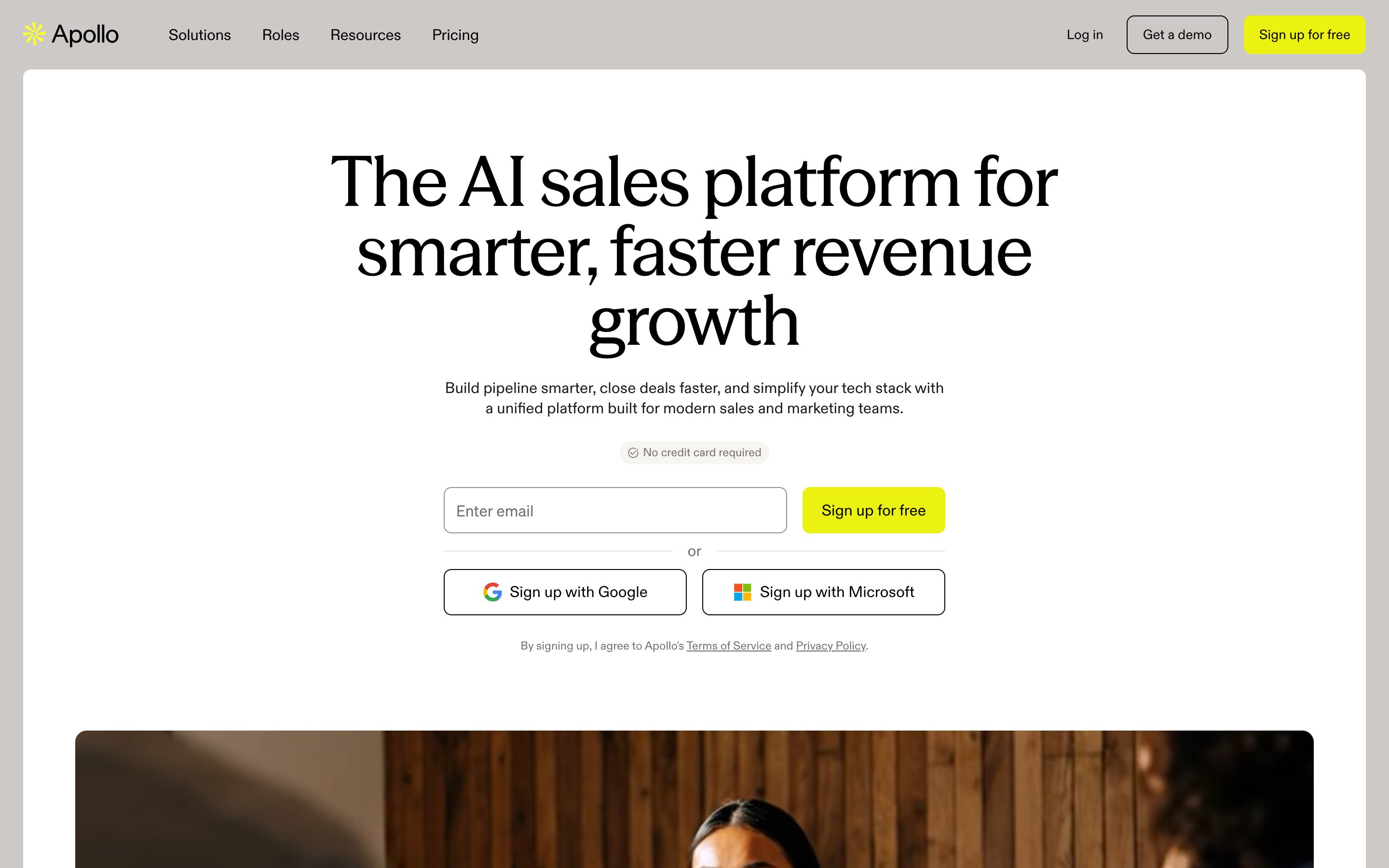
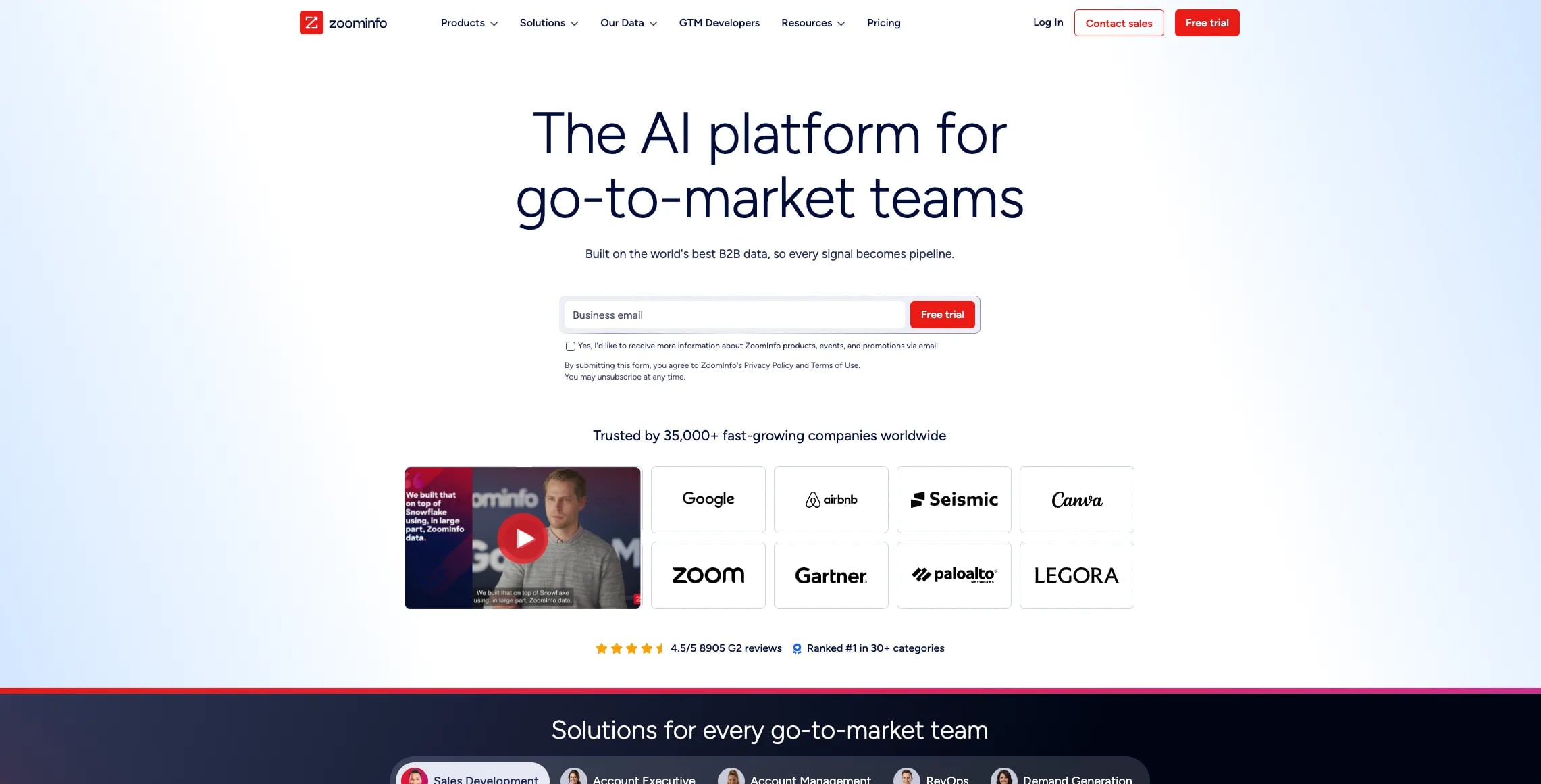
Apollo is the self serve option with a published price and sending built in, while ZoomInfo is the contracted enterprise data layer with deeper intent and workflow coverage and no price you can check in advance.
Pick Apollo.io if
- You want a published price and a card on file, with a free forever tier and paid plans from $49 per user per month billed annually, from their published pricing, July 2026.
- Sending matters as much as data: Apollo's automated email sequences, A/B testing, parallel dialer and deal boards sit in the same subscription as the database.
- You are buying per seller rather than per department, and 1,000 to 4,000 export credits per month covers your list building.
- You want an open REST API, a Chrome extension and an MCP server without an enterprise agreement.
Pick ZoomInfo if
- You are buying for a department rather than a seat, and the Sales, Marketing, Operations and Talent editions map to how your teams are organised.
- Buying intent, website visitor identification, lead scoring and lead routing are the reason for the purchase, not just contact records.
- You want enrichment, cleansing and deduplication wired into Salesforce and a warehouse rather than paid for by export credit.
- Contracted scale is part of the reassurance: more than 35,000 customers and about $1.25 billion of 2025 revenue, per their annual report.
Apollo.ioZoomInfoApollo.ioZoomInfoApollo.io10 export credits and 5 mobile credits per month, credits do not roll over
Free forever, 10 export credits per month, 5 mobile credits per month
1,000 export credits and 75 mobile credits per month, no dialer
1,000 export credits per month, 75 mobile credits per month, No dialer
2,000 export credits and 100 mobile credits per month
2,000 export credits per month, Dialer included, Buying intent data
4,000 export credits and 200 mobile credits per month, 3 seat minimum
4,000 export credits per month, 3 seat minimum, International dialing
Quoted per account
Contact their sales team
From their published pricing, July 2026 (check their pricing). Paid tiers are per user per month billed annually, with higher monthly rates. Credit allocations differ between Apollo's legacy and new credit systems, so a given account may see different numbers.
ZoomInfoA set amount of monthly credits, with additional credits available only by participating in their contributory network
Set amount of monthly credits, Extra credits for joining their contributory network, Access to contact data
Quoted per account on functionality, users and records under management
AI sales agent layer over their data, Account and buyer recommendations
Quoted per account on functionality, users and records under management
Company and contact search, Buying intent signals, Sales automation and engagement
Quoted per account on functionality, users and records under management
Account based marketing and audience activation, Website visitor identification, Ad targeting and form optimization
Quoted per account on functionality, users and records under management
CRM enrichment and data cleansing, Deduplication and lead routing, Data as a service delivery
Quoted per account on functionality, users and records under management
Candidate sourcing on the same data set, Recruiting workflows
ZoomInfo does not publish prices. Subscriptions are quoted per account based on the functionality, users and records under management included in each product edition, per their 2025 annual report, checked August 2026. Check their pricing page.
Apollo.io pros
- One subscription covers contact data, enrichment, email sequencing, a dialer and deal management
- 240M+ contacts and 30M+ companies with 65+ search filters, their published figures
- Email sequencing is genuinely automated, with A/B testing, task reminders and multi-touch workflows
- A real free forever tier, and trial plans that include 50 credits and 5 mobile credits
- Open REST API, Chrome extension, workflow automation and an MCP server
Apollo.io cons
- Credits do not roll over between billing cycles, and overage credits are $0.20 each with a 250 credit minimum purchase, per third party pricing breakdowns, July 2026
- Revealing a mobile number costs eight credits and exporting a contact outside Apollo costs an export credit, so the meter runs hardest when data leaves
- LinkedIn steps inside a sequence are manual task reminders, per Apollo's own knowledge base
- Data accuracy on exported contacts is the most repeated theme in public reviews, and Inaccurate Data is a top negative tag on G2
ZoomInfo pros
- One contracted source covering contact and company data, buying intent, website visitor identification, enrichment and routing
- Product editions map to whole departments: Sales, Marketing, Operations and Talent, rather than one generic seat
- Large integration marketplace spanning CRMs, dialers, data warehouses and AI assistants including Claude and ChatGPT
- AI layers shipped rather than promised, with Copilot, GTM Workspace, GTM Studio and an MCP server
- A free community edition, ZoomInfo Lite, with a monthly credit allowance
ZoomInfo cons
- No published pricing at all, so cost cannot be compared without a sales conversation
- Growth has flattened, with Q2 2026 revenue up 1.2 percent year over year and a $650.5 million goodwill impairment in the same quarter
- Net revenue retention was 90 percent at the end of 2025 and 87 percent a year earlier, meaning existing customers on average spent less than the year before
- Recent Trustpilot reviews are dominated by data removal and consent complaints rather than product criticism
Apollo is the one you can price before talking to anyone. Its paid tiers are $49, $79 and $119 per user per month billed annually, with higher monthly rates, from their published pricing, July 2026. ZoomInfo does not publish prices at all, and per their 2025 annual report subscriptions are quoted on the functionality, users and records under management in each edition, checked August 2026. A like for like cost comparison is therefore not possible without a quote.
Yes, and both are small. Apollo publishes a free forever tier with 10 export credits and 5 mobile credits per month, and trial plans that include 50 credits and 5 mobile credits. ZoomInfo offers a free community edition called ZoomInfo Lite with a set amount of monthly credits, and states that users can receive additional monthly credits by choosing to participate in its contributory network.
Apollo's homepage states 240M+ contacts and 30M+ companies, searchable with 65+ filters, which is their published figure. ZoomInfo does not publish a record count on the sources reachable for this listing, and instead describes coverage in terms of company and contact records with org charts, hierarchies, locations, technographics and funding details. Neither figure is independently audited here, so test both against your own target accounts.
Neither markets itself as a LinkedIn sending tool. Per Apollo's own knowledge base, LinkedIn steps inside a sequence are task reminders that the assignee completes by hand before marking the task done, while email sequencing is the automated channel. ZoomInfo's engagement features sit in its Sales edition and its dialer and sales tool integrations, rather than in LinkedIn sending.
Directory information is compiled from vendors' own published materials and other public sources, dated at verification time, and provided as is for research purposes. All product names, logos and screenshots are the property of their respective owners and are used for identification only; Weezly is not affiliated with or endorsed by the listed vendors unless stated. Verify current terms with the vendor before purchasing. About the data
One of these tools is ours.
Weezly is in this directory too: LinkedIn outreach with AI clone videos, a 300M+ leads database and booking, from $59 per month. See if it earns a spot in your stack.