

Sales dialers, grouped by how they place the call
A sales dialer removes the dialing itself from a rep's day. The differences between products come down to how many calls run at once, what happens to the numbers you call from, and how much of the call afterwards gets analysed. Parallel dialers place several calls simultaneously and connect a rep only when a person picks up, which is the shape most outbound SDR teams buy. Power dialers work one call at a time from a list with no gap between them, and tend to pair with connection quality features such as carrier reputation monitoring and local number pools. Cloud phone systems include a dialer inside a wider telephony product, which suits teams handling inbound calls as well as outbound. A few CRMs put the dialer directly on the record, so calls, SMS and email stay in one timeline. Two things decide the real cost here. Most vendors in this category quote rather than publish, and call intelligence, transcription and coaching are frequently add-ons priced per license on top of the seat. Every figure below is dated, so check the vendor page.
Purpose built outbound calling, usually sold to SDR teams by the seat with a minimum. Compare the number of simultaneous lines, what the vendor does about spam flagged numbers, and whether coaching is included or billed separately.

Dials up to ten lines at once and hands a rep the call only when a human answers, with a salesfloor, AI scorecards and roleplay practice around it. Neither published tier shows a figure, both start at three seats, and coaching is a separate add-on, checked August 2026.
Full dossier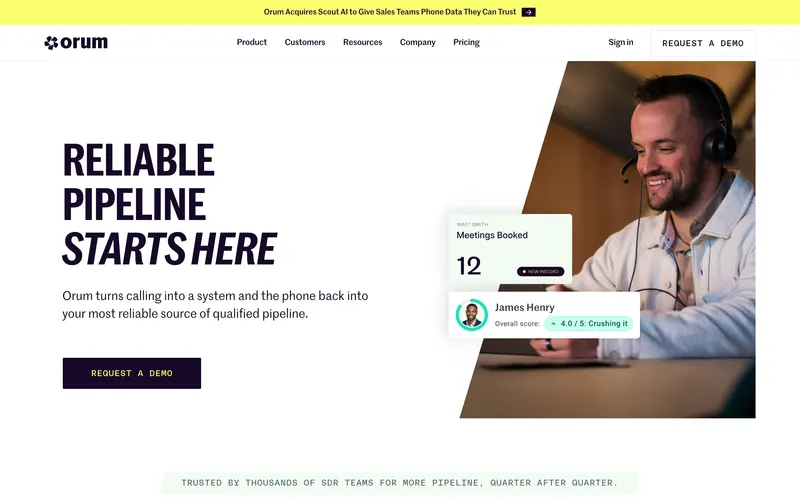

A parallel dialer that has grown coaching, account research, buying signals and sequencing around the phone, so the whole calling day happens in one system. Every plan runs through a custom quote, and the simultaneous line count is not published.
Full dossier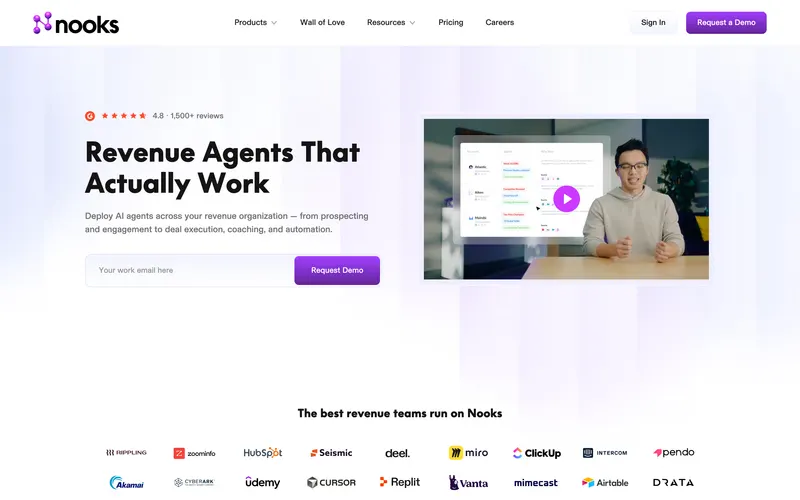

Competes on answered calls rather than line count, pairing no connection delay with carrier level spam monitoring and number scoring, and including its own CRM. Entry runs to $140 per seat each month on annual terms, August 2026, and parallel dialing is not advertised.
Full dossier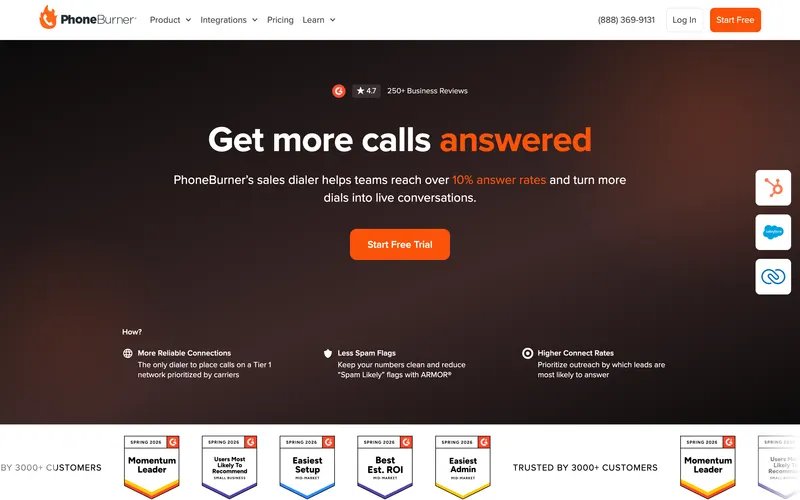

Multi line dialing and business SMS that live inside HubSpot, Salesforce, Pipedrive or Zoho, with a seven day trial that needs no card. Plan prices are not published, and their own pages give different maximum line counts.
Full dossier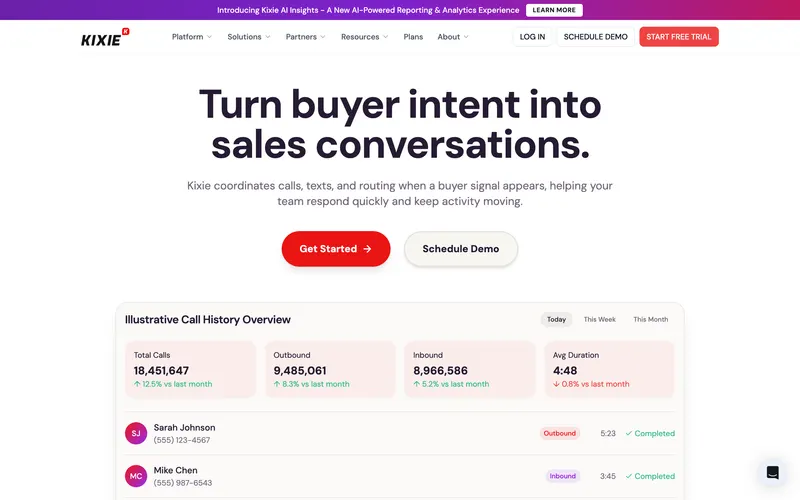
Full telephony first, outbound dialing second. Worth it when the same team answers inbound calls, needs routing and IVR, or wants one vendor for the phone number and the campaign.

A business phone system with routing, IVR and queue callback, plus a power dialer and voicemail drop for outbound work. Conversation intelligence is a per license add-on, and self serve plans start at three licenses.
Full dossier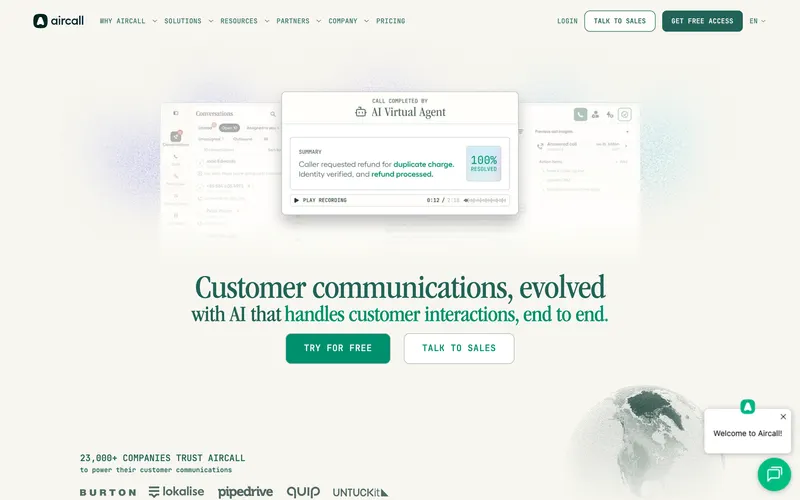

The most legible price list in this comparison, from $29 per user per month on annual billing, August 2026, covering phone, SMS and AI notes. The predictive and dynamic dialers sit in a quoted suite, and call scoring starts at $89 per user.
Full dossier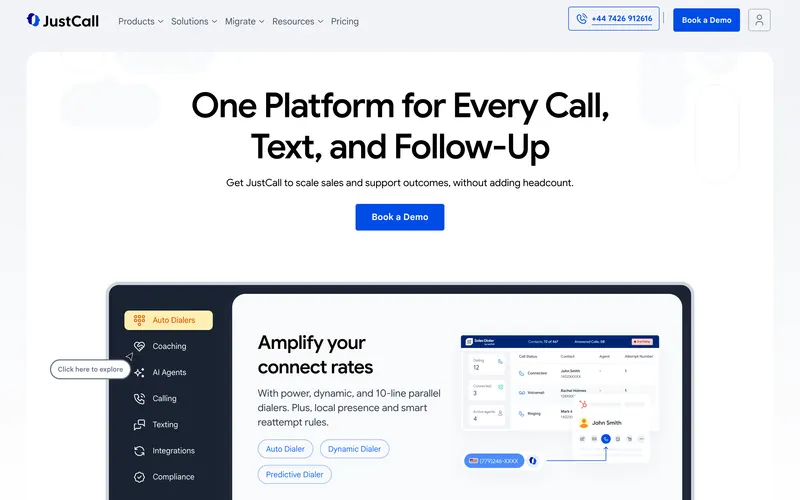
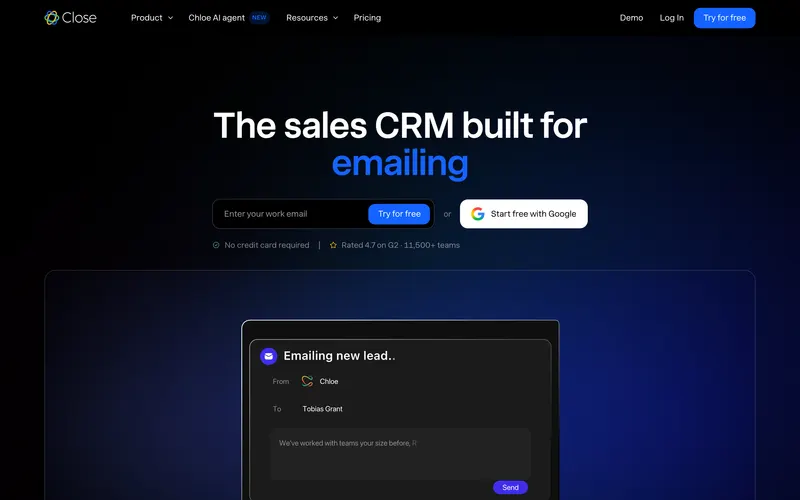
The dialer as a feature of the system of record, so every call, text and email lands on the same lead without an integration to maintain. The trade off is that the calling features usually sit on the upper tiers.

The whole map
Browse the full directory: every GTM tool, with receipts.
A power dialer calls one number at a time from a list and starts the next call the moment the previous one ends, so it removes the gaps rather than multiplying the attempts. A parallel dialer places several calls at once, detects which one a human answered, and connects the rep to that call while dropping the rest. Parallel dialing produces more conversations per hour, at the cost of more abandoned attempts against the numbers you are calling, which is why vendors pair it with answer detection and number reputation tooling.
The published end of this list runs from about $29 per user per month for a cloud phone with calling included to $140 per user per month for a power dialer with its own CRM, checked August 2026 on annual billing. The parallel dialers are quoted rather than listed, and both Orum tiers carry a three seat minimum. Budget separately for call intelligence, since transcription, scoring and coaching are add-ons at several vendors, and for numbers and minutes where those are billed on usage.
They can reduce it, but no vendor controls how carriers label a number. The features that exist are monitoring and remediation: PhoneBurner advertises carrier level spam monitoring with flag remediation and number scoring, Orum publishes caller ID pools with daily spam monitoring, and Kixie offers local presence pools that replace flagged numbers. Call volume per number, answer rates and complaint rates still drive the outcome, so treat these as maintenance tools rather than a guarantee.
Some vendors sell it, usually as a separate line item rather than a default. Kixie lists do not call compliance as a compliance add-on, and several B2B data vendors screen numbers against do not call registers before they ever reach a dialer. Nothing in this category removes the obligation to know the rules in the countries you call, including consent, calling hours and recording notification, so check what the vendor screens and what stays your responsibility before rolling out a list.
Directory information is compiled from vendors' own published materials and other public sources, dated at verification time, and provided as is for research purposes. All product names, logos and screenshots are the property of their respective owners and are used for identification only; Weezly is not affiliated with or endorsed by the listed vendors unless stated. Verify current terms with the vendor before purchasing. About the data